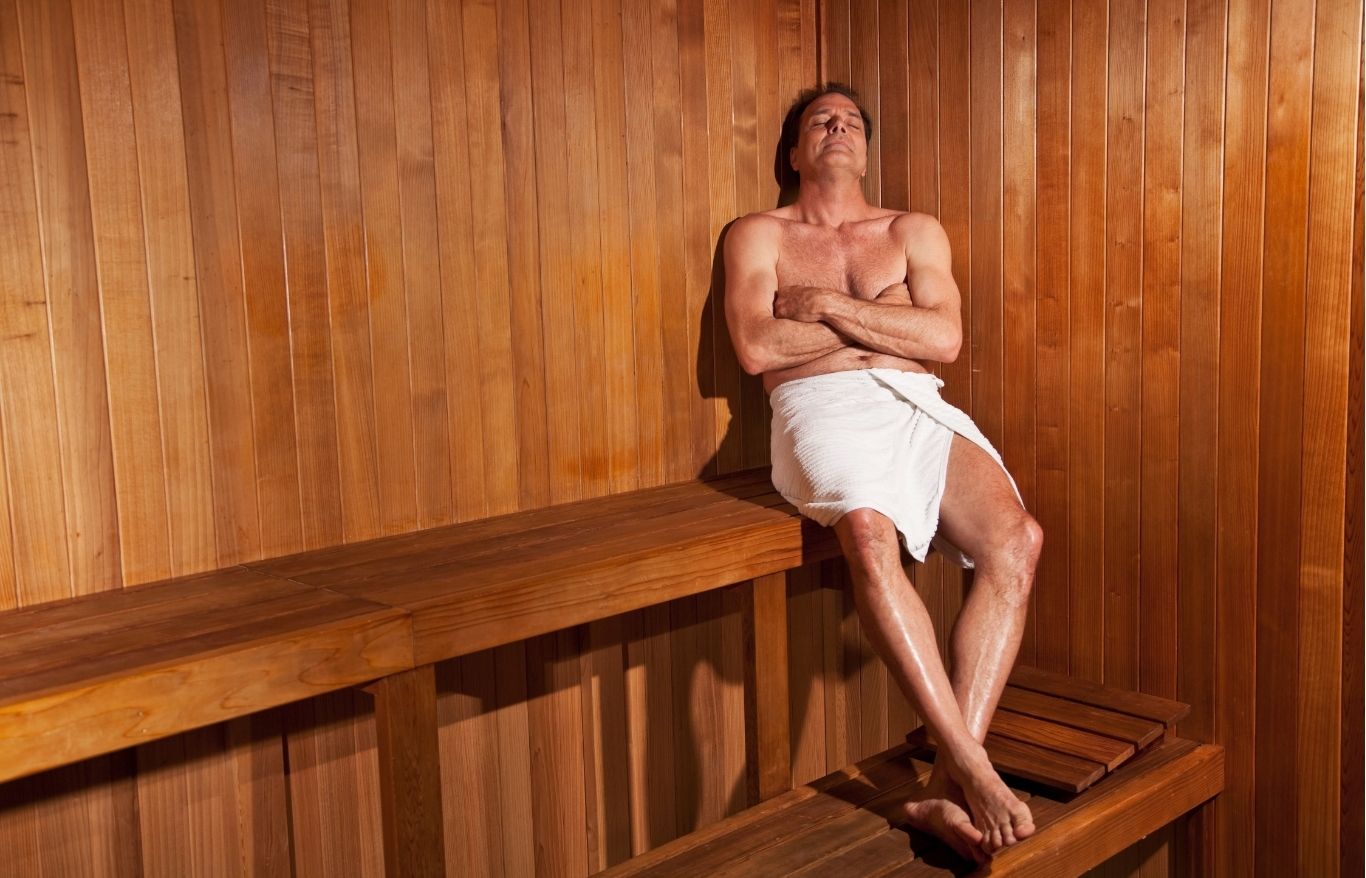

When you step into a sauna with the intention to exercise, you’re entering a realm where traditional fitness meets cutting-edge thermal science. Here’s the thing – recent research shows that infrared saunas use infrared light to heat your body directly rather than heating the air around you, with studies showing that the heat from this sauna deeply penetrates your muscles and joints, providing deep tissue relief and promoting muscle recovery. This direct heating mechanism creates changes in your body that you simply can’t get through regular exercise alone.
Table of Contents
- How Heat Changes Your Metabolism
- Why Infrared Saunas Hit Different
- How to Gradually Get Your Body Used to the Heat
- Fitting Heat Training Into Your Current Routine
TL;DR
- Your cells produce protective proteins at 3-5x normal rates during sauna workouts, creating cellular armor for enhanced recovery
- Infrared heat penetrates 1.5-2 inches deep, preferentially activating slow-twitch muscle fibers for endurance gains
- Blood plasma volume increases 10-20% within just 2 weeks of consistent thermal training
- Your brain’s temperature control center becomes more efficient, improving stress resilience beyond the sauna
- Start with 5-minute sessions at 160°F, progressing by 2 minutes weekly for safe adaptation
- Maintain heart rate 20-30 BPM above resting while keeping core temperature between 101-103°F
- Flow-based movements and isometric holds work best in thermal environments
How Heat Changes Your Metabolism
Look, I’m not going to sugarcoat this – combining heat with exercise does some pretty wild things to your body that regular workouts just can’t touch. We’re talking about fundamental changes in how your cells work, protect themselves, and bounce back from stress. Your body literally learns to operate differently when you challenge it with both movement and sustained heat.
Understanding the cellular mechanisms behind thermal training builds upon the sauna’s natural detoxification processes, where heat exposure triggers cellular cleanup mechanisms that complement exercise-induced adaptations. The sauna workout becomes a powerful tool for cellular regeneration when you understand these underlying processes.
| Temperature Range | What Happens to Your Cells | How Long to Stay | What You Get Out of It |
|---|---|---|---|
| 150-160°F | Your body starts making protective proteins | 8-10 minutes | Basic heat adaptation |
| 160-170°F | Cells start building more energy factories | 15-20 minutes | Better energy production |
| 170-180°F | Your heart gets the biggest workout | 20-30 minutes | Peak performance benefits |
| 180°F+ | Your body goes into survival mode | 10-15 minutes | Only if you really know what you’re doing |
What Actually Happens to Your Body When You Exercise in Heat
Your mitochondria – think of these as tiny power plants in every cell – don’t just work harder when you exercise in sauna conditions. They actually rebuild themselves and multiply faster than normal. This cellular transformation creates better energy production and builds incredible cellular toughness that sticks around long after you towel off.

Your Body’s Repair Crew Goes Into Overdrive
Here’s where things get really interesting: when you exercise in sauna conditions, your cells start cranking out protective proteins at 3-5 times their normal rate. Think of these heat shock proteins like your body’s emergency repair crew – they protect your cells from damage and speed up recovery. The sweet spot is keeping your core temperature between 101-103°F while doing gentle movements. Push too hard and you’ll overheat before getting these benefits.
I learned this the hard way. I used to think I could just power through the heat like any other workout. Big mistake. The moment I started feeling unsteady or my heart rate went crazy, I knew I’d crossed the line. Paying attention to these signals during a sauna workout is what separates smart training from dangerous stupidity.
Your Cells Start Building More Energy Factories
The combination of heat and movement triggers something called mitochondrial biogenesis – basically, your cells start building new power plants at rates 40% higher than regular exercise. But here’s the catch: this only happens when you keep your workout intensity below 60% of your max heart rate. Push harder than that, and your body shifts into survival mode instead of building mode.
This was a total game-changer for me. I used to think “no pain, no gain” applied everywhere, but sauna workouts taught me that sometimes doing less gets you more. Those gentle yoga flows and slow movements might feel easy, but they’re triggering some serious cellular changes behind the scenes.
A typical session for building these cellular power plants might look like: 5 minutes of easy stretching at 150°F, followed by 15 minutes of flowing yoga at 160°F, keeping your heart rate at about 40% of maximum. This approach maximizes the cellular benefits while preventing you from overheating.
Your Heart and Blood Vessels Get a Complete Upgrade
Your cardiovascular system goes through specific changes when you challenge it with heat and exercise at the same time. The thermal stress creates improvements in heart efficiency that you just can’t get from regular workouts alone. Your blood vessels, heart muscle, and even your blood itself change in response to this double challenge.
Your Blood Volume Gets Bigger, Fast
Regular sauna workouts increase your blood plasma volume by 10-20% within just 2 weeks. That’s like giving your cardiovascular system a natural performance upgrade. But this requires drinking the right stuff at the right times – something I learned through trial and error: drink 16-20 oz of electrolyte solution 30 minutes before going in, and take small sips every 3-4 minutes during your session.
I can’t stress this enough – getting dehydrated will ruin your progress and could actually be dangerous. I keep a water bottle with electrolytes right next to me and set a gentle timer on my phone. Those frequent little sips make the difference between feeling great and feeling miserable.
The cardiovascular benefits become even more pronounced when combined with post-sauna cold exposure protocols, creating a powerful contrast therapy that maximizes circulatory adaptations.
Your Brain Learns to Handle Stress Like a Champ
Your nervous system develops serious heat tolerance and stress resilience through controlled thermal exercise. This affects both your physical performance and mental toughness in ways that go far beyond just sauna sessions. Your brain literally learns to function better under pressure, creating neural pathways that help you in all areas of life.
Your Internal Thermostat Gets Smarter
Your hypothalamus – your brain’s temperature control center – becomes way more efficient when challenged with heat plus movement. It learns to keep you balanced under greater stress, essentially upgrading your body’s internal thermostat. This requires gradual exposure: start with 5-minute sessions at 160°F, adding 2 minutes each week.
The gradual progression is crucial here. I made the mistake early on of trying to jump straight into longer sessions because I felt fine. But adaptation happens slowly, and rushing just leads to burnout or heat exhaustion. Don’t try to be a hero on day one.
Your Stress Hormones Find Their Sweet Spot
Sauna workouts create a unique pattern in your stress hormones that’s different from both regular exercise and just sitting in a sauna. This builds better stress resilience throughout your day. The key is keeping movement that raises your heart rate 20-30 BPM above resting while you’re in 170-180°F conditions.
What surprised me most was how this affected my stress response outside the sauna. You know that feeling when you’re stressed at work and everything feels overwhelming? After doing sauna workouts for a few months, those same situations barely faze me. My nervous system learned to stay cool under pressure through consistent practice.
Your Mental Focus Under Pressure Improves Big Time
Training your brain to stay focused and coordinated while you’re thermally stressed improves your overall mental toughness and decision-making when things get intense. Practice simple coordination exercises while keeping your breathing steady. This mental training under stress translates to better performance in high-pressure situations throughout your life.
Try this focus-building sequence: Stand on one foot while slowly raising the opposite arm overhead, hold for 30 seconds, then switch sides. Do this pattern for 5 minutes at 165°F. The challenge of staying balanced while dealing with heat stress builds remarkable mental resilience during your sauna workout.
Why Infrared Saunas Hit Different
Infrared sauna workouts offer unique heating patterns that create different responses in your body compared to traditional steam saunas. The way infrared wavelengths heat you from the inside out affects how your muscles work and how your joints move during exercise in ways that surface heating just can’t match. Understanding these differences helps you get the most out of what only infrared thermal training can provide.
The choice between infrared versus traditional sauna technology becomes crucial when planning workout protocols, as each heating method creates distinct physiological responses during exercise. Your infrared sauna workout will feel fundamentally different from traditional steam-based sessions.
Deep Heat Changes Everything
Infrared wavelengths go 1.5-2 inches into your tissue, creating internal heating that changes how your muscles fire during exercise. This deep heating creates a fundamentally different training effect compared to surface heating, letting you target specific muscle types and movement patterns more effectively.
Your Endurance Muscles Get Priority Treatment
Infrared heat preferentially activates Type I (slow-twitch) muscle fibers during exercise, making it perfect for endurance-based movements and recovery-focused workouts rather than high-intensity training. This selective activation helps build the kind of muscular endurance that supports long-term athletic performance and everyday functional movement.
This discovery completely changed how I approach my training schedule. Instead of trying to replicate my gym workouts in the sauna, I focus on endurance-based movements that complement my regular strength training. The results have been remarkable – my muscular endurance improved dramatically, and I feel like I have an extra gear now.
Your Joints Get a Major Mobility Boost
The deep heating effect of infrared radiation combined with movement creates perfect conditions for improving range of motion and working through mobility restrictions. Your joints and surrounding tissues respond differently to internal heating, allowing for mobility improvements that are tough to achieve through regular stretching alone.
Your Connective Tissue Becomes More Pliable
Infrared heat softens fascial tissue while gentle movement patterns help reorganize collagen fibers. But this requires specific timing: hold stretches for 90-120 seconds rather than the typical 30 seconds because of increased tissue flexibility. The longer hold times allow the heated tissue to actually restructure rather than just temporarily lengthen.
I was skeptical about the longer hold times at first, but the difference is night and day. Those tight spots that never seemed to improve with regular stretching? They finally started releasing when I gave them the time they needed under infrared heat. It felt weird at first, but the results spoke for themselves.
Your Joint Fluid Gets Optimized
The fluid in your joints becomes less thick under infrared heating, improving joint lubrication during movement. Do circular joint movements starting with small ranges and gradually increasing the range over 3-5 minutes per joint group. This systematic approach to joint mobility under thermal conditions creates lasting improvements in range of motion and joint health during your sauna workout sessions.
How to Gradually Get Your Body Used to the Heat
Developing a smart approach to increasing thermal stress while maintaining your ability to exercise requires the same thoughtful progression you’d use in any serious training program. You can’t just jump into intense heat and expect your body to adapt safely. This structured approach focuses on building heat tolerance while preventing overreaching or dangerous heat-related problems that could mess up your progress entirely.
Building an effective thermal training program requires understanding the scientific method behind sauna routines, where systematic progression creates lasting physiological adaptations rather than temporary heat exposure. Your sauna workout progression should follow these established principles.
| Week | Temperature | How Long | What Kind of Exercise | Heart Rate Target |
|---|---|---|---|---|
| 1-2 | 150-155°F | 8-10 min | Just holding positions | Resting + 20 BPM |
| 3-4 | 155-160°F | 12-15 min | Gentle flowing movements | Resting + 25 BPM |
| 5-6 | 160-165°F | 15-20 min | More dynamic movements | Resting + 30 BPM |
| 7-8 | 165-170°F | 20-25 min | Full movement sequences | Resting + 35 BPM |
| 9+ | 170-175°F | 25-30 min | Advanced stuff | Resting + 40 BPM |
Building Your Heat Tolerance Foundation
Your heat tolerance develops in distinct phases, each requiring specific temperature ranges, exercise intensities, and duration protocols. Rushing through these phases is dangerous and counterproductive. The systematic progression through different thermal loads maximizes adaptations while preventing overreaching or dangerous heat-related complications.
Foundation Phase: Your Thermal Training Wheels
Start with 8-10 minute sessions at 150-160°F doing only bodyweight movements like gentle yoga flows or tai chi patterns. Keep an eye on your heart rate to make sure it doesn’t go above resting rate plus 40 BPM during this 2-3 week getting-used-to-it period. This foundation phase teaches your body the basics of temperature control while moving, setting you up for more advanced stuff later.
I’ll be honest – this phase felt almost too easy when I started. But those first few weeks are doing crucial work behind the scenes. Your sweat response is calibrating, your heart is adapting, and your nervous system is learning to coordinate movement under thermal stress. Every sauna workout during this phase builds essential adaptation capacity.
Let me tell you about my biggest rookie mistake – I
Choosing the Right Exercises for Heat
Some movements generate too much extra heat, others require too much coordination when you’re thermally stressed, and some are just plain dangerous in confined, heated spaces. Understanding which movement patterns work best under thermal stress – and which ones to avoid – is crucial for both safety and effectiveness.
Static Holds Become Your Best Friend
Isometric exercises work exceptionally well in sauna conditions because they don’t generate excessive additional heat while still providing significant training stimulus. Progress by increasing hold times rather than adding resistance – your body weight becomes plenty challenging when you’re fighting thermal stress simultaneously.
The beauty of isometric holds in the sauna is how they force you to focus on breathing and mental resilience. That 2-minute plank becomes a meditation on staying composed under stress. It’s training your body and mind at the same time.
Sauna-Safe Isometric Checklist:
- ☐ Plank variations (standard, side, reverse)
- ☐ Wall sits with proper back support
- ☐ Glute bridges and single-leg holds
- ☐ Warrior III pose holds
- ☐ Tree pose for balance training
- ☐ Avoid: Jump squats, burpees, high-intensity intervals
Flow-Based Movements Create Meditative Training
Continuous, flowing movements like yoga sequences or qigong patterns complement the meditative aspects of sauna use while providing gentle cardiovascular challenge. Design 5-7 movement sequences that can be performed in a 6×6 foot space, focusing on smooth transitions rather than explosive movements.
I’ve developed a series of flowing sequences that I cycle through during longer sessions. The rhythmic nature of these movements actually helps regulate my breathing and keeps me centered when the heat starts to feel intense.
A 10-minute flow sequence: Cat-cow stretches (2 minutes) → Standing forward fold to mountain pose (2 minutes) → Warrior I to II transitions (3 minutes) → Seated spinal twists (2 minutes) → Child’s pose cool-down (1 minute). This sequence maintains continuous movement while allowing for natural breathing patterns during your sauna workout.
Tracking Your Heat Adaptations
Monitoring your progress in thermal training requires different metrics than regular workout tracking. You’re looking at how well your body regulates temperature, recovers from heat stress, and develops physiological markers that show your body’s adaptation to this unique training stimulus.
Your Sweat Tells a Story
As you adapt to sauna workouts, your sweat rate increases but sodium concentration decreases, indicating improved heat adaptation. Track sweat volume by weighing yourself before and after sessions, aiming for 1-3% body weight loss per session. This data helps you understand how efficiently your cooling system is developing.
Weighing myself before and after sessions was eye-opening. In the beginning, I’d lose maybe half a pound in 10 minutes. Now, after months of consistent training, I can maintain longer sessions with more controlled fluid loss – a clear sign my body has adapted.
Thermal Adaptation Tracking Checklist:
- ☐ Pre/post-session body weight
- ☐ Core temperature readings
- ☐ Heart rate recovery time
- ☐ Subjective heat tolerance (1-10 scale)
- ☐ Sleep quality the night after sessions
- ☐ Next-day energy levels
Heart Rate Variability Reveals Adaptation
HRV patterns change uniquely with thermal exercise adaptation, showing improved autonomic nervous system resilience. Measure HRV 12-24 hours post-sauna workout rather than immediately after, as thermal stress temporarily suppresses normal HRV patterns. This delayed measurement gives you a true picture of how your nervous system is adapting.
Common Mistakes and Honest Struggles
Let me tell you about my biggest rookie mistake – I thought I could just waltz into a 180°F sauna and start doing my regular workout routine. Twenty minutes later, I was sitting outside feeling nauseous and dizzy, wondering what the heck I’d gotten myself into.
Common Beginner Blunders I’ve Seen (and Made):
- Trying to do your regular gym workout in sauna conditions
- Forgetting to hydrate properly because you’re focused on the exercise
- Wearing too many clothes (cotton t-shirts become sweat sponges from hell)
- Checking your phone every 30 seconds to see how much time is left
- Comparing yourself to that one person who seems to live in the sauna
The truth is, there were definitely days I wanted to quit. Doing slow, controlled movements when you’re used to high-intensity workouts feels weird at first. You might feel like you’re not getting a “real” workout. Stick with it – your body is working harder than you think.
Fitting Heat Training Into Your Current Routine
Sauna workouts aren’t meant to replace your regular training – they’re designed to enhance and complement your existing exercise program. The key is understanding when, how, and why to incorporate thermal training for maximum benefit. Whether you’re using it for active recovery, performance preparation, or as a standalone training method, timing and sequencing matter enormously.

Strategic Timing for Maximum Benefit
Sauna workouts serve different functions within your comprehensive training program depending on when you schedule them. They can speed up recovery after intense sessions, prepare your body for upcoming challenges, or provide active training stimulus on lighter days. Understanding these different applications helps you maximize the synergistic effects with other training methods.
Post-Workout Recovery Acceleration
Using gentle sauna movement sessions within 2-4 hours after intense training enhances recovery by promoting circulation and reducing inflammatory markers. Limit these sessions to 10-15 minutes with heart rate staying within 20 BPM of resting levels. This isn’t about adding more training stress – it’s about optimizing your body’s recovery processes.
The timing window here is crucial. Too soon after intense training and you risk overheating an already stressed system. Too late and you miss the optimal recovery window. I’ve found that 3-4 hours post-workout hits the sweet spot perfectly.
Understanding proper dry versus wet sauna applications becomes essential when planning recovery sessions, as humidity levels significantly impact your body’s cooling efficiency during post-workout thermal therapy.
Weekly Integration Template:
- Monday: Heavy strength training + evening recovery sauna (15 min)
- Tuesday: Morning sauna workout (25 min) + light cardio
- Wednesday: Regular training + post-workout sauna (10 min)
- Thursday: Standalone sauna session (30 min)
- Friday: Pre-weekend preparation sauna (20 min)
- Saturday: Active recovery sauna with mobility focus
- Sunday: Gentle flow session for weekly reset
Practical, Honest Advice
Here’s what I wish someone had told me before I started:
The Real Talk Nobody Mentions:
- You’re going to sweat in places you didn’t know could sweat
- Your first few sessions will feel awkwardly long even if they’re only 8 minutes
- Yes, other people might think you’re a little crazy (embrace it)
- You’ll probably feel amazing for about 2 hours afterward, then crash a bit
- Don’t plan anything important right after your first few sessions
Stuff That Actually Matters:
- Bring a towel for the bench and one for yourself
- Water with electrolytes isn’t optional – it’s survival gear
- If you feel dizzy or nauseous, get out immediately (no heroics)
- Start embarrassingly easy and work up slowly
- Track how you feel the next day, not just during the session
The biggest game-changer for me was letting go of my ego. This isn’t about proving how tough you are or how much heat you can handle. It’s about consistency and gradual adaptation. That person doing gentle stretches for 15 minutes at 160°F is getting way more benefit than the person trying to do jumping jacks at 180°F for 5 minutes before tapping out.
Your First Month Reality Check:
Week 1: “This is weird, but I can do this”
Week 2: “Okay, I’m starting to get it”
Week 3: “Wait, am I actually looking forward to this?”
Week 4: “How did I exercise without this before?”
Don’t worry if your timeline looks different. Some people adapt faster, others need more time. The only thing that matters is that you keep showing up and listening to your body.
The Bottom Line
Look, sauna workouts aren’t magic, and they’re definitely not for everyone. But if you’re curious about trying something that could genuinely change how your body handles stress, recovers from workouts, and performs under pressure, this might be worth exploring.
The science is clear: combining controlled heat exposure with movement creates changes in your body you simply can’t achieve through traditional exercise alone. From cellular-level changes in protein production and your cells building more energy factories to cardiovascular improvements and neurological stress resilience, thermal training offers a unique pathway to enhanced performance and recovery.
The key lies in understanding that this isn’t about working harder – it’s about working smarter with heat as your training partner. Gradual progression, proper exercise selection, and systematic monitoring ensure you reap these remarkable benefits safely and effectively.
Start small, be patient with yourself, and remember that the goal isn’t to suffer through it – it’s to gradually teach your body to thrive in challenging conditions. Your future self (the one who stays calm in stressful meetings and recovers faster from tough workouts) will thank you for taking the time to do this right.
And hey, worst case scenario? You’ll have some interesting stories to tell at parties.